
You don't have to like me: what writing a novel is teaching me about people
For a long time, I've written about someone I know quite well: myself.
My experiences, my mistakes, my ADHD diagnosis, the things I didn't understand for years, what has hurt me, what has helped me, and the times I've asked myself: "But why on earth am I reacting like this?"Writing about my own life seemed complicated enough… until I decided to write a novel. And then I discovered something: getting inside someone else's head, even if you invented that person, can be even harder.
A character doesn't have to be perfect
When I started creating characters, I realized something I find fascinating: we have a huge tendency to categorize (good, bad, right, wrong, like, dislike). But real people are rarely that simple. We can love someone deeply and still hurt them; make the wrong decision believing we're doing the right thing; or be generous and selfish at the same time. And that's precisely what I want to explore when I write fiction: I don't want to create perfect characters, I want to create people.Understanding does not mean justifying
This idea appears frequently in my understanding of life and is also emerging in my writing. Trying to understand why someone does something doesn't mean justifying what they've done. We can try to understand a person's fear and still think they acted wrongly. We can learn the story behind a behavior and continue setting boundaries. We can have empathy without accepting everything.Writing fiction forces me to change chairs.
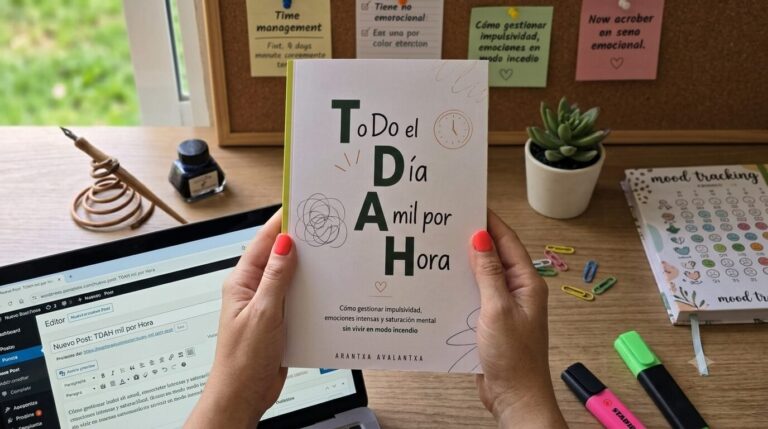
When I was writing Going a mile a minute all day longThe chair was mine. Now, I have to constantly get up and ask myself: What is this character thinking? What do they fear? What are they trying to protect? That forces me to do something that we also find difficult in real life: to look at the same story from a different perspective.We are all the secondary character in someone’s story.
In our own lives, we are the protagonists: we know everything we have experienced. But when we appear in someone else’s story, that person sees only a part of it. And we do exactly the same thing with others: we see a reaction or hear a remark, and we fill in the gaps.Maybe you don’t have to be likeable for me to be interested in you.
And that is, in part, where the title comes from: You don’t have to like him/her.It seems that to connect with a character, we have to like them—but I’m not so sure. There are characters who drive us to distraction, yet we can’t stop reading about them. A good character doesn’t have to be likeable; they have to make you feel something, spark questions, and make you doubt.I am also discovering another side of myself as a writer.
Writing about ADHD has given me so much, but I don’t want to confine myself to just one way of writing. I also want to play, invent, create stories, and allow myself to explore that creative side without constantly questioning whether it “fits” with what I’ve done so far. I’m not leaving my past work behind; I’m expanding upon it. Going a mile a minute all day long It all began with a need to understand. Anti-Chaos Planner It all began with a need to understand. You don’t have to like him/her. It stems from somewhere else: creating and imagining.So this time I want to do something different
I don't want to wait until the novel is finished to suddenly appear and announce that I've published a book. I want to share part of the journey with those of you who are curious.Do you want to join me while "You Don't Need to Like Me" is born?
I'll tell you about the latest news, share a snippet, and you'll be one of the first to know when it will be available.
Did you relate to this?
📖 In my book Going a mile a minute all day long you will find practical tools to manage impulsiveness, mental overload and intense emotions.
👉 You can also subscribe to receive new articles and free resources.
Do you want me to write about a specific topic? Write to meI also collaborate with media outlets and companies creating content about ADHD, well-being, and mental health.